Euroacademia Conferences
 Europe Inside-Out: Europe and Europeanness Exposed to Plural Observers (9th Edition)April 24 - 25, 2020
 Identities and Identifications: Politicized Uses of Collective Identities (9th Edition)June 12 - 13, 2020
 8th Forum of Critical Studies: Asking Big Questions AgainJanuary 24 - 25, 2020
 Re-Inventing Eastern Europe (7th Edition)December 13 - 14, 2019
 The European Union and the Politicization of Europe (8th Edition)October 25 - 26, 2019
 Identities and Identifications: Politicized Uses of Collective Identities (8th Edition)June 28 - 29, 2019
 The European Union and the Politicization of Europe (7th Edition)January 25 - 26, 2019
- 7th Forum of Critical Studies: Asking Big Questions AgainNovember 23 - 24, 2018
 Europe Inside-Out: Europe and Europeanness Exposed to Plural Observers (8th Edition)September 28 - 30, 2018
- Identities and Identifications: Politicized Uses of Collective Identities (7th Edition)June 14 - 15, 2018
Papers

From the Watergate to Reagan Years: When Captain America Stopped Being a Soldier
Significantly, during the Reagan Years, Cap’s trust and loyalty towards the U.S. government is not reinforced and he keeps his distance, choosing to fight for “the American dream”, shown as different from the official U.S. policy. These two runs of Captain America (Englehart’s and Gruenwald’s) allow us to understand the role of comic books in helping American citizens (and especially the young adults who read them at the time) to negotiate their disappointment towards their leaders while at the same time reinforcing American values. Our main point is that the main continuity of the Marvel universe interestingly questions contemporary U.S. History, while at the same time reinforcing a sense of ever-lasting American values, and the immortality of the American Dream. And Captain America is the perfect metaphor of it.
Digital Traces: Comics Autobiography in New Media Forms
In scholarship on autobiographical comics, much is routinely made of the individual artist’s stylistic signature, as expressed through what Ann Miller has called “a subjective vision, traced on the paper by the artist’s hand”. In other words, what Johanna Drucker calls the “material form of the trace” is key to the understanding of the “autobiographical pact” in comics, where the mark of the “graphiateur” (Baetens 147) is usually understood as an expression of subjectivity that gives special access to the core of selfhood responsible for making it in the first place. But what happens when the autobiographical trace is either remediated on a computer screen, or, even more radically, created digitally through tools such as Photoshop or a Wacom tablet? As Aaron Kashtan points out, comics created or distributed electronically “have their own modes of materiality, which need to be evaluated independently”, and this paper will therefore examine the specific materiality of digital autobiographical comics, with a special focus on how the relationship between author and reader is influenced by the (re)mediation of the authorial trace in new media forms.
Global Cities with Local Identites – Chinese Urban Transformation
In the context of the presentation, the topic of the discussion will be whether current and future Chinese urban design approaches develop towards cultural sustainability. It is argued that urban reinnovation transforms towards a cultural sustainable direction, as it seems, by valuing local traditions with a focus on demands and needs of todays urban inhabitants. The objective is to understand the Chinese urban development and its transformation by analyzing the existing yet ever-changing physical environment with the tools of architectural and urban semiotics.
The Ruins of Rome from Living Places to Non-Places
It's now time to tie again the wire of long-lasting practice of reuse, which has been cut by 19th-20th century archaeology; time to go back to a conception of ancient remnants not only as something to admire, but as spaces which can be lived, completely readmitted in the urban context. So we have to substitute the «public use of history» of the fascist age with the «public use of historical monument». Architecture is asked to make the reuse possible: the recent decision of reconstructing the arena of the Coliseum (followed moreover by a harsh debate) can represent a step toward the effective readmission of ruins inside contemporary city and perception.
14 Art Stations of the Naples Metro
The Art Stations of Naples Metro are a functional art-project ideated by Achille Bonito Oliva that includes some stops of Naples Metro: in this particular stopping and transit places, special attention was paid to making the environment beautiful, comfortable and functional. The Art Stations originated from a project formulated by the city government with a view to make the urban area’s public transport centers more attractive and to give everyone a chance to get an up-close look at prime examples of contemporary art: here, art works are not considered as furniture, but strictly enclosed in the architecture.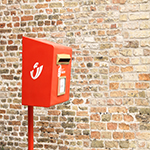
Artistic and Diplomatic Exchange between the Republic of Ragusa (Dubrovnik) and Serenissima – Shaping Identity through Architecture
In order to shed more light on the reasons of these artistic exchanges, the present paper explores figure of the Venetian architect Marino Groppelli (1662-1728) and builders who came with him from Venice to Ragusa to rebuilt St. Blais’s church after the fire completely ruined it on the 25 May 1706. In the long history of Republic of Ragusa (4,5 centuries) this is the first time that Venetians built in Dubrovnik. The fact that the city’s patron church is placed in the heart of the Old city of Dubrovnik, on the crossing of two most important streets (Placa-Stradun and Pred dvorom) makes this choice even more complex to understand.
The Opening Shows of the Annual ‘Life Ball’ in Vienna
Emerging from all that the Opening Show has always been an interaction of performances (of renowned artists, many of which popular in the gay scene), dance (classical ballet of the Austrian State Opera), iconological representations (Klimt?s Beethovenfries in 2015, Botticelli and others in previous years), fashion shows (e.g. by Gaultier, Versace, Vivienne Westwood, Cavalli, John Galliano, Diane von Furstenberg) and so forth. This leads to working points of queer artistic research with numerous pictorial examples and the question how much queerness there is in different forms of art represented at the shows discussed.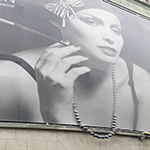
Gender Identification of Spectators: Analysis of Chantal Akerman’s Films
What does now construct our gender identification as a spectator when our perception is not a biological determination or patriarchic construction (here it is important to mark Linda Alcoff who explored the problem of identity crisis in cultural feminism). Thus, the research is aimed to analyze the problem of gender identification of Chantal Akerman’s viewer through revision of today’s feminist film discourse on the topic of feminist counterpoint cinema and elaboration of the modern aesthetic and ideological perception problem.
The Artist as Cultural Producer: A Call to Thinking
This paper deals with the importance of an ethos of stewardship that comes with a vision for all games as a new aesthetic form in visual culture generally, but more explicitly, the applications herein of such ethics apply specifically to the group of games for which violence is a key element. I will demonstrate the importance of twenty-first century technological breakthroughs regarding insights of the brain, and precisely, the adolescent brain, and through a Heideggerian and Lacanian lens, I call for thinking between neuroscience and philosophy in order to cognize a hybrid of knowledge for the greater good of humanity.
Line as the Essence of Becoming-Artist
Philosophy seems content to address the artist in terms of genius, history, standards, or to analyze his or her radical nature. But what is the essence of the artist? In this paper I argue that line is the essence of becoming-artist: the artist’s privileged relationship with line is one of revisiting the nascent place of form, where bare line is the primordial instantiation of space and time, and that this repetition is paramount to existence through an unfinalizable anticipation of re-creation.