
Euroacademia Conferences
 Europe Inside-Out: Europe and Europeanness Exposed to Plural Observers (9th Edition)April 24 - 25, 2020
 Identities and Identifications: Politicized Uses of Collective Identities (9th Edition)June 12 - 13, 2020
 8th Forum of Critical Studies: Asking Big Questions AgainJanuary 24 - 25, 2020
 Re-Inventing Eastern Europe (7th Edition)December 13 - 14, 2019
 The European Union and the Politicization of Europe (8th Edition)October 25 - 26, 2019
 Identities and Identifications: Politicized Uses of Collective Identities (8th Edition)June 28 - 29, 2019
 The European Union and the Politicization of Europe (7th Edition)January 25 - 26, 2019
- 7th Forum of Critical Studies: Asking Big Questions AgainNovember 23 - 24, 2018
 Europe Inside-Out: Europe and Europeanness Exposed to Plural Observers (8th Edition)September 28 - 30, 2018
- Identities and Identifications: Politicized Uses of Collective Identities (7th Edition)June 14 - 15, 2018
Papers

Mugham, Meykhana, Jazz: Musical Performances, Traditionalism and National Identity in Contemporary Azerbaijan
The study explores why mugham, meykhana, and jazz have come to represent Azerbaijan, how they have been approached and produced, and why memory and tradition, in these particular forms, have taken on particular significance in different historical periods: the beginning of the past century, the Soviet times, and nowadays. Above all it the research points to music "traditions" in Azerbaijan as being an artificial cultural construct, which is periodically reinvented. It also demonstrates how "folk revival" has played a key role in strengthening Azerbaijani national consciousness in the post-Soviet period.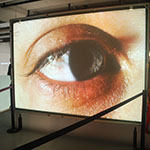
Modernity and Identity in São Paulo During the 1950’s: Three Murals from Cândido Portinari
This presentation aims to introduce, through the study of three murals from the Brazilian artist Cândido Portinari, hypothesis on how some regional topics - linked to the memory and identity of São Paulo and the Latin America - were related to the modern architecture and the debates observed in Europe.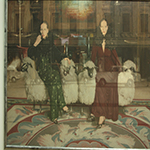
Who Can Erase the Traces?
Galindo tends to promote dissidence in the public sphere through the mechanism of disillusionment and disenchantment.She is intent on understanding reality as historical and conflictive rather than natural or harmonious. Indeed, through her activist performances, and by using her body, the artist recalls notions of national identity and the formation of a social imaginary.
Seven Wonders of the World: How to Remember Destroyed Artworks
This contribution tries to develop an interesting theme: the memory of an imagined artwork. The case in question, the seven wonders of the world, is the most famous because it explains how ancient (and destroyed) artworks have become an archetype that lives from antiquity to contemporary age. The reason of this success is present in the same definition of Wonder: Aristotle’s philosophy introduces this word, identified as a primordial feeling that is at the beginning of knowledge.
Somewhere Between
When China passed its One Child Policy to limit population growth, an unexpected surge of abandoned baby girls started flowing into its orphanages. Since 1991, over 80,000 of those girls have been adopted by American families. While many adoption-focused documentaries give voice to adoptive parents, Somewhere Between explores the emotional and cultural impact of adoption from the point of view of four teenage girls, all adopted from China. This award winning film shares their personal journeys as these adoptees convey the experiences of a generation of young people attempting to reconcile their multiple identities while navigating the already perilous waters of American adolescence. A recent adoptive parent of her own Chinese baby, filmmaker Linda Goldstein Knowlton opens the film expressing her concerns for her daughter. How will she build a strong sense of identity as she grows older? Will she feel like an 'outsider' living in a family with two Caucasian parents? How will she supplement the missing pieces of her early life? Goldstein Knowlton seeks these answers by chronicling the experiences over two years of Haley, Jenna, Ann, and Fang, all struggling to find their place in the world. Each girl approaches her Chinese heritage differently, connecting with her birth culture in varying degrees. And each grapple in different ways with the the discrimination and racism they face, as their identity challenges typical ideas about race and culture for themselves and their communities. Shedding stereotypes and a one-size-fits-all identity, Somewhere Between poignantly conveys the vulnerability, confusion, and courage of these girls as they wonder, 'Who am I?' As Somewhere Between plunges the viewer into their ordinary and sometimes extraordinary experiences, we too, are encouraged to pause and consider who we are - both as individuals and as a nation of immigrants and people from diverse backgrounds.
Collective Anamnesis and Individual Identity: A Critical Reflection on Debord’s Theory to Interpret the Artistic Transformation of Symbolic Urban Spaces
The contemporary phenomena of informal uses of urban spaces, temporary architectural interventions - and even occupation- for artistic and creative purposes demonstrate that the affirmation of collective values can only take place through the appropriation of specific urban spaces. Following Debord, in this process, the individual identity is affirmed accordingly. Through a critical overview of selected case studies in Europe, this study demonstrates the evidence of the linkage between the creative actions, as a form of expression of the collective identity, and the spatial features of the places where they may happen.
Ordinary Cities and EXTRAordinary Immigrants: Liquid Identities in the Urban Settings
The Kaiserslautern’s case study, investigated by means of ethnography and biographical methods, illustrates the embedding processes of various immigrant groups. Among others the most essential for the local identity quest are asylum seekers, ethnic German or Jewish re-settlers from the former Soviet Union, military-related US-citizens, and high-qualified professionals at university or in the IT branch.These different immigrant groups with their liquid identities influence the local society and its structures in their peculiar ways, transforming Kaiserslautern as an ordinary city by EXTRAordinary immigrants.
Performing the Transitory Space: Landscape Gardens and the Enactment of Identity
It was a shared cultural knowledge of only a part of the society and the bodily enactment of the shared norms was without a doubt a sign of social identity, and was also strengthening and materializing that identity. The objective of my paper is to show how landscape gardens were not only perceived, but bodily performed and how this somatic enactment was a crucial building block of identity. To do so, I am going to analyse two gardens created in the first half of the 18th century (Stowe and Rousham) and the literature about visiting them.
Taxonomy of Engagements in Furnishing the City
Most cities identify with the compendium of everyday neighborhood narratives and urban dialogues that can be associated with furnishings in parks, squares and streets. In that same fabric of the built environment are landscape furniture and outdoor artifacts such as lighting and pedestrian objects, significantly shaping the public space into a functional and idyllic community. Each of the major city squares or neighborhood spaces reveal various aesthetic elements and purposeful forms.
Teshigahara Hiroshi – Filmmaker of the Japanese Collapsing Identity
This presentation will pay special attention to two of Teshigahara’s movies The Face of Another (1966) and The Man without a Map (1968) and bring out special patterns such as social mask and evaporation of man like illustrations of atomic and war legacy as well as crisis of modernity resulting from it.