
Euroacademia Conferences
 Europe Inside-Out: Europe and Europeanness Exposed to Plural Observers (9th Edition)April 24 - 25, 2020
 Identities and Identifications: Politicized Uses of Collective Identities (9th Edition)June 12 - 13, 2020
 8th Forum of Critical Studies: Asking Big Questions AgainJanuary 24 - 25, 2020
 Re-Inventing Eastern Europe (7th Edition)December 13 - 14, 2019
 The European Union and the Politicization of Europe (8th Edition)October 25 - 26, 2019
 Identities and Identifications: Politicized Uses of Collective Identities (8th Edition)June 28 - 29, 2019
 The European Union and the Politicization of Europe (7th Edition)January 25 - 26, 2019
- 7th Forum of Critical Studies: Asking Big Questions AgainNovember 23 - 24, 2018
 Europe Inside-Out: Europe and Europeanness Exposed to Plural Observers (8th Edition)September 28 - 30, 2018
- Identities and Identifications: Politicized Uses of Collective Identities (7th Edition)June 14 - 15, 2018
Papers
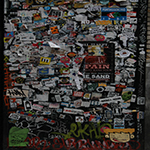
Reinventing Ukraine at 30fps: The Babylon13 Collective
This presentation will discuss their work as a compelling “history of the present,” a mushrooming archive whose formal and stylistic elements, I argue, call the question of what “Europe” means to us in 2015. Indeed, similar to Timothy Garton Ash’s assertion in the wake of the “Revolutions of ‘89” that the West had much to learn from the East a quarter-century ago, I maintain that the “Maidan Revolution” and its aftermath show yet again that the (non-EU) East continues to fight for that which the European Union argues. By re-viewing Babylon13, we review this East/West binary, and we renew our commitment to being “united in diversity.”
#Euromaidan and its Europeanness in the Ukrainian Maidan (2013-2014): The Discourses of Maidan’s Different Political and Media Actors on European Values
This paper explores the different political and media actors’ discourses on Europeanness and on the European values during the Ukrainian Maidan (2013-2014). Arguing that the utopia vision of Europe played an active role in the protests, the author analyzes specific examples of European values, defined by the protesters and their demonstrations. The author concludes that Maidan wanted to show its “European” multinational and gender-equal nature mainly in contrast to Russia, which is depicted as less cultural and civilized than Ukraine and Europe.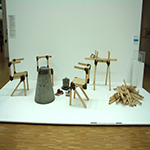
Theatre Stage Design as the Hyperrealistic Social Imitation
Since the second half of the 20th century theatre has started to use completely different form of its expression tools. Mostly in German theatre society critics have started to use a term that refers to this new practice as „Regietheater“ 'director ́s theatre'. Where does this performing strategy have its own borders? How and when we could use „local architectural medium“ to discuss another „local“ stories not only as dramaturgical plan of theatres but as the dramaturgy of today’s Europe?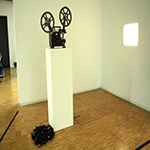
Eastern Europe as Other in Silent Cinema
The following study will discuss depictions of Eastern Europe through the medium of silent film. My goal is to explore what distinguishes Eastern Europe from Western Europe and how early cinema has played a vital role in modern understanding of this divide. I will focus on three distinct images of the “orient:” traditional Judaism, vampires, and the nascent Soviet Union. It is beyond the scope of this study to fully delve into the cultural and ideological clashes of east versus west throughout history and even within the bounds of individual episodes in the past century.Revision of the Initial Assumptions and the Historical Choices the Field of EU Foreign Policy
This article aims to revise the historical choices in the field of the EU foreign policy and to answer did /or how did the EU foreign policy development contribute to the EU today.The European Union Model for the Albanian Europeanization
he paper will emphasize how sociocultural, political and international cooperation and development are major prerequisites for achieving successful democracy and effective policies. The aim of this paper is to analyze the Albanian europeanization process through the EU standards.
A Multidimensional Analysis of Democratic Deficit by Components with Application in Albania during 2005 – 2014
Democratic deficit around the world is a random field in the sense of Modern Probability Theory. Any democratic state may potentially suffer from democratic deficit. Trust in political institutions (government, parliament, political parties) displays fluctuations over time and persistent contrasts among different branches of government within each specified democratic state.
Public or Private Actors: Does it Change Anything to the Europeanization of Welfare? A Comparison across Wallonia Region (BE), Rhône-Alpes (FR), and Lombardy(IT)
We investigate the implementation of the 2007 – 2013 ESF Employment Program in three different regions: Wallonia (Belgium), Rhône-Alpes (France) and Lombardy (Italy). These regions are characterized by different levels of decentralization, and different types of public-private cooperation. We focus on continuous vocational training and social assistance.
Turkey as a Builder of Europe: Perspectives From Memory and Identity
Abstract: Collective memory does not come into being spontaneously. It is cretaed and mainteined by collective institutions and thenaction of each and everyone. Europe, seen as s political project designed to transcend nations, faces the challenge already encountered in the past when the nations were being built. And also, collective memories mould social gruops, genereations and nations and constitute identity. Such memories can refer to real events but also to myths.In this context when you look at the Europe's borders you can see that it is identified sometimes historica
An Alternative Imagining of Europeanness: Turkish-Dutch Migrants
This study aims to present an alternative imagining of Turkish and European identities in the context of Turkish migrants in the Netherlands. How inclusion and exclusion function in their adaptation process is the main focus.