
Euroacademia Conferences
 Europe Inside-Out: Europe and Europeanness Exposed to Plural Observers (9th Edition)April 24 - 25, 2020
 Identities and Identifications: Politicized Uses of Collective Identities (9th Edition)June 12 - 13, 2020
 8th Forum of Critical Studies: Asking Big Questions AgainJanuary 24 - 25, 2020
 Re-Inventing Eastern Europe (7th Edition)December 13 - 14, 2019
 The European Union and the Politicization of Europe (8th Edition)October 25 - 26, 2019
 Identities and Identifications: Politicized Uses of Collective Identities (8th Edition)June 28 - 29, 2019
 The European Union and the Politicization of Europe (7th Edition)January 25 - 26, 2019
- 7th Forum of Critical Studies: Asking Big Questions AgainNovember 23 - 24, 2018
 Europe Inside-Out: Europe and Europeanness Exposed to Plural Observers (8th Edition)September 28 - 30, 2018
- Identities and Identifications: Politicized Uses of Collective Identities (7th Edition)June 14 - 15, 2018
Papers

Federal Techniques for Protecting the Rights of Linguistic Minorities: The Belgian Model
Mechanisms must be developed within each community for the protection of philosophical and religious minorities, in particular in education (by means of teaching in a minority language and education of a recognized religion) or in the area of governance (insured representation of philosophical minorities in the Administration, but no quota system).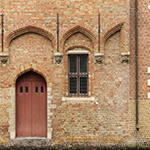
Like a Bomb Hit it! The Urban Regeneration of Manchester since 1996
The contention of this paper is that, despite massive and expensive reconstruction, his observation still holds true. Manchester's status as a problematic example of British urban regeneration presents difficulties in assessing the impact and significance of urban design.
Art in Oslo: Old, New, Borrowed and Blue – Creating a New Identity for the City and its People
The presentation introduces the work of the great Norwegian patron of the arts, Christian Rignes. He undertook the task of making citizens proud of their heritage, extracting the essence of the Norwegian soul and identity, as well as bringing the genius of artists like Dali, Rodin and Buseyne to the Norwegian woods. His Ekeberg Park in the East with sculptures underlining feminime qualities, balance the dominance of masculinity of the Vigeland Park in the Oslo West-End.
“I Am the Space Where I Am”: Public Spaces and the Quests for Identity in Multicultural Cities
In this paper I explore public spaces as the “corners” were processes of identity formation are produced, anchored, contested and recreated anew. The paper focuses on examining Puerta del Sol in Madrid and Plaza Italia in Santiago, their relevance to their respective identities of their cities and city-dwellers, the mutual determinations and the cultural images that each person project onto others, albeit the representations of these images during the recent social movements experienced in both cities.
The Politics of Globalization and Heritage in Havana, Cuba
This paper briefly traces the global politics of 20th century development in Havana, particularly in relation to tourism. It then analyzes tourism in relation to preservation / restoration practices in Old Havana using the Plaza Vieja (Old Square)—Old Havana’s second oldest and most restored urban space—as a case study. In doing so, it exposes preservation / restoration as a dynamic and politically complex practice that operates across scales and ideologies, institutionalizing history and memory as an urban design and identity construction strategy.
Identity and Identification in Politics and Economy: Why “Branding” Cannot Replace Brand Techniques
The paper hints upon the lessons to be learnt and applied by democratic politicians and their assistants, in order to leave the field neither to misleading paradigms nor to populist extremists. Rather, the paper advocates in favor of a populism of qualitative reason and distinction in a new understanding of democracy.
National Identity in the Era of Global Competitiveness: A Critical Analysis of Nation Branding Through the Case of South Korea
By looking at the phenomenon of nation branding, and focusing on the South Korean presidential nation branding strategy over recent years, this article tries to uncover how the imperative of competitiveness has moved from the corporate sector to the representation of national identity.
Feet of Clay of the National Pride
Research based on analyses of the EVS 2008 data demonstrates how national pride depends on specific political support (distrust in key nation building institutions - government, army, and church; dissatisfaction with government; dissatisfaction with development of democracy), subjective well-being, social distrust, and ethnic and civic nationalism.
Inequality, Elite Messaging and National Pride
This paper presents a preliminary analysis of data from the Comparative Manifesto Project and European Values Survey to suggest that both phenomena may be at work, and that inequality and political rhetoric have mutually-and reinforcing effects on the intensity of nationalism among contemporary publics.
European Identity Construction between Vision and Action
The paper shows that European identity can best be understood by acknowledging its draft character: that Europe is characterized by and can progress along with the interplay of individually developed visions of Europe on the basis of personal experience.