
Euroacademia Conferences
 Europe Inside-Out: Europe and Europeanness Exposed to Plural Observers (9th Edition)April 24 - 25, 2020
 Identities and Identifications: Politicized Uses of Collective Identities (9th Edition)June 12 - 13, 2020
 8th Forum of Critical Studies: Asking Big Questions AgainJanuary 24 - 25, 2020
 Re-Inventing Eastern Europe (7th Edition)December 13 - 14, 2019
 The European Union and the Politicization of Europe (8th Edition)October 25 - 26, 2019
 Identities and Identifications: Politicized Uses of Collective Identities (8th Edition)June 28 - 29, 2019
 The European Union and the Politicization of Europe (7th Edition)January 25 - 26, 2019
- 7th Forum of Critical Studies: Asking Big Questions AgainNovember 23 - 24, 2018
 Europe Inside-Out: Europe and Europeanness Exposed to Plural Observers (8th Edition)September 28 - 30, 2018
- Identities and Identifications: Politicized Uses of Collective Identities (7th Edition)June 14 - 15, 2018
Papers
The Western Jewish Communities as Perceived by Polish Jews in the Interwar Period (1918 – 1939)
The Jewish Communities in the west were perceived as communities which combined their Jewish characteristics with Modernity and patriotism, while the Jewish communities in Poland were described as traditional. The lecture will discuss the impact of this concept on the self image of assimilated Polish Jews. My lecture will present the different perception of the Jewish communities.
Ephemeral Architecture Built to “stay.” Urban Transformations for the Realization of the Great Exhibitions in Italy in the First Half of the Twentieth Century: From the Realization to Present
Abstract: During the Thirties and Forties of the Twentieth century in Italy, the main themes in the arts imposed by the fascist regime were inspired by ancient Rome, to the colonial conquest and the construction of new enterprises in Africa. These recurrent themes, together with an exhibition apparatus required, mainly technical, did not prevent some artists and architects to achieve peaks of high quality. The propaganda messages that were produced in the thirties and forties of the twentieth century in Italy, are due mainly to two aesthetic trends: one is part of the paradig
“Urboglyphs” (Urban Figures of Memory) and Spaces of Lived Experience: New Forms to Reawaken the Memory
Memory is above all anti-museum that unfolds in space, constructed as lived and moving expression that the arts of the city building must recover along with spatial reconstruction.
Conflicting Urban Identities: The Multiple Images of Sarajevo
This paper discusses the urban transformation of Sarajevo as a controversial process of identity making and reshaping; in particular, it shows how the East-West dichotomy, along with its stereotypes and imposed imaginary, can be acknowledged by looking at the city’s architecture.
Between Propaganda and Cultural Diplomacy: Nostalgia towards Socialist Realism in Post-Communist Bulgaria
This paper argues that nostalgia towards Socialist Realism is one of the impediments, which hinder fine art to function as cultural diplomacy because it maintains a sense of an illusory wholeness, which connects the art world of the country to the closeness and the grand recit of Communism. Introducing aspects of a current practice based research; this paper focuses on institutional and personal examples of nostalgia, examined in relation to the functions of fine art as propaganda.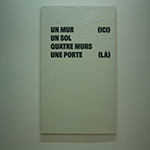
Sculptor Ivan Meštrović – Cultural and Political Diplomat of 20th and 21st Century
Meštrović used the platform of one man exhibitions (Victoria & Albert Museum, London, 1915) and joint projects (Exhibition of Yugoslav Artists, Petit Palais, Paris, 1919) as the tool of the dissemination of cultural and political diplomacy. In the period of the breakup of the second Yugoslavia, in the nineties, his role had been reassessed, providing the path to revision of his political and artistic persona.
Dancing Art and Politics beyond the Iron Curtain: Martha Graham’s 1962 Tour to Yugoslavia and Poland
My work demonstrates that Graham’s artistic and political performance beyond the Iron Curtain was a bold enterprise which deserves full attention and analysis, and not only because it redefined and enlarged the dancer’s career and the boundaries of American cultural diplomacy in Europe.
Paris-Moscow 1900-1930: Exhibition at the Centre Pompidou in Paris 1979
Thanks to the discovery of new archives at the Centre Pompidou Paris, the recently published “mémoires” of Valéry Giscard d’Estaing and my own personal interviews of French ambassadors and curators in charge of the exhibit in 1979, my essay is able to shed new light on the cultural diplomatic role of Paris-Moscow, 1900-1930, a unique artistic event during the Cold War.
The Role of Art in Diplomacy and State’s International Representation in Latvia (1918–1940)
Since the restoration of independence in 1991, the history of Latvia is considered to be a continuation of the period of the first period independence (1918-1940) with its achievements and failures in politics, economics and culture. This aim of this presentation is to assess the idea of continuity of cultural (art) institutions and the representation of art abroad.
The West through Moldavian Lens: Reflections on a Liminal Identity
The Moldovans construct themselves a liminal: part Romanian/European, part outsider and thus inferior. The national identity issue is, thus, augmenting the sense of marginalisation and inferiority in Moldova’s normative representation of the EU, offering an original take on the way in which the East-West cleavage divides nations.