
Euroacademia Conferences
 Europe Inside-Out: Europe and Europeanness Exposed to Plural Observers (9th Edition)April 24 - 25, 2020
 Identities and Identifications: Politicized Uses of Collective Identities (9th Edition)June 12 - 13, 2020
 8th Forum of Critical Studies: Asking Big Questions AgainJanuary 24 - 25, 2020
 Re-Inventing Eastern Europe (7th Edition)December 13 - 14, 2019
 The European Union and the Politicization of Europe (8th Edition)October 25 - 26, 2019
 Identities and Identifications: Politicized Uses of Collective Identities (8th Edition)June 28 - 29, 2019
 The European Union and the Politicization of Europe (7th Edition)January 25 - 26, 2019
- 7th Forum of Critical Studies: Asking Big Questions AgainNovember 23 - 24, 2018
 Europe Inside-Out: Europe and Europeanness Exposed to Plural Observers (8th Edition)September 28 - 30, 2018
- Identities and Identifications: Politicized Uses of Collective Identities (7th Edition)June 14 - 15, 2018
Papers

Self or Other? The Eurozone Crisis in British Discourse
The paper aims to explore the discussion of the Eurozone crisis in British political/media discourse through the lens of Foreign Policy Discourse Analysis, based on the work of Foucault. The paper examines how traditional discourse on state and nation and on Britain's relationship to Europe/ the EU is reflected in contemporary debate on the Eurozone crisis.
Remembering and Transforming: A Study of Art and Culture in Berlin Since 1989
My paper considers the important role that contemporary art plays in remembering Berlin’s turbulent history and also how the art scene and the urban landscape of the city are being transformed as a consequence. To refer to a quotation from Memorylands(McDonald, 2013) “Memory has become a preoccupation […] implicated in justifications for conflicts and calls for apologies for past wrongs”.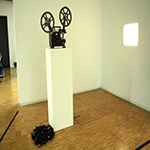
Pipilotti Rist’s ‘I Couldn’t Agree With You More’: The Ethical Integrity of Being Swiss
This paper culminates in the impunity of Rist’s video art with respect to Bergson’s durée, a conception of time, space and processes occurring in intellectual tensions and deferrals, or Aristotelian means, for an integrity of Rist’s subjective and Swiss wholeness in plurality. Rist’s impunity is confirmed by Levinas’ theory of the integrity of objective subjectivity in sacred discourse with the other.
Europeaness vs. Non-Europeaness: ‘Europe’ as Category of Collective Self-Description in Spanish and Portuguese Literature
Considering the reference to ‘Europe’ and ‘European’ in Spanish and Portuguese literary texts, this paper aims at giving an answer to the principle questions: What kind of configurations of the world and which ideas of community and diversity are transmitted via ‘Europe’ as category of collective self-description? And: To what extent ‘Europe’ serves as instrument of politicization of collective identities?
Greek Symbolism: The Quest of its European Identity: The Representation of a Movement in the Hellenic Art
The goal is to demonstrate how are the subjects of the thematics, the style and the expression of Symbolism, as we find them in the European centres, traced in the paintings of the Greek Symbolism. How can we detect the perception of the Symbolism in the hellenic area (‘‘correspondances’’) and the attempt of the Greek artists not only to attribute a european allure to the movement but also to configure the Greek Symbolism, assigning to it a very special particularity (differences)?
Europe as a Category of Thought: Autonomy as an Unfinished Project
This paper aims to revisit precisely this patrimony of critical thinking. It is the belief implicit in this paper that contemporary understandings of Europe should be placed more firmly within this tradition of aspiration for autonomy as putting into question the imaginary institutions of the society and their emanated representations and shake the walls of their cognitive closure. This is because, autonomy as unlimited questioning is a premise and not an outcome of European culture.
“This Whole Great Universe Serves as a Theatre”: Pan-European Trojan Origins
In this excerpt from his 1588 essay “Of the most outstanding men,” Michel de Montaigne describes Homer’s influence as contributing to a Europe-wide contemporary social phenomenon. These observations call attention to three central elements linking Troy with the historical imaginary of late sixteenth-century Europeans: the remarkable popularity of the Troy legend.
Europe’s Early Encounters with Eastern Thought: Schopenhauer
This paper will elucidate the connection between Schopenhauer's system and Buddhism and Vedanta and will examine whether his interpretation was valid and whether it contributed toward a trans-cultural understanding within philosophy of the nineteenth century Europe.
The Notion of Dignity in European Culture
This paper argues that personal dignity, or a dignified moral orientation, results from a constancy of intellectual efforts aimed at a positive expression of individuality in a given community. It makes the point that dignity is a feature of the moral character that attaches to the individual who strives to make an honest use of talents to live a respect filled existence.
Dracula, from History to Cinema
The goal of my paper is to present Dracula as the ‘real king’ of the Eastern Europe culture. Vlad of Wallachia was a real character who lived in Transylvania between 1431 and 1476. His nickname “Dracula” comes from Romanian “Dracul” and means “Dragon”. After his death, Vlad earned the surname Tepes (Impaler) because of he was used to impale his enemies.