
Euroacademia Conferences
 Europe Inside-Out: Europe and Europeanness Exposed to Plural Observers (9th Edition)April 24 - 25, 2020
 Identities and Identifications: Politicized Uses of Collective Identities (9th Edition)June 12 - 13, 2020
 8th Forum of Critical Studies: Asking Big Questions AgainJanuary 24 - 25, 2020
 Re-Inventing Eastern Europe (7th Edition)December 13 - 14, 2019
 The European Union and the Politicization of Europe (8th Edition)October 25 - 26, 2019
 Identities and Identifications: Politicized Uses of Collective Identities (8th Edition)June 28 - 29, 2019
 The European Union and the Politicization of Europe (7th Edition)January 25 - 26, 2019
- 7th Forum of Critical Studies: Asking Big Questions AgainNovember 23 - 24, 2018
 Europe Inside-Out: Europe and Europeanness Exposed to Plural Observers (8th Edition)September 28 - 30, 2018
- Identities and Identifications: Politicized Uses of Collective Identities (7th Edition)June 14 - 15, 2018
Papers

The Eurozone Crisis: Transformative Impact on the European Project and Model(s) of Capitalism
Abstract: Europe in these days appears to move from one ‘crisis’ to the next. The deep and apparently perennial crisis of the Eurozone has been on the headlines for a couple of years now, and shows signs of a further exacerbation. The crisis raises several issues of interest for students of political science, political economy and international relations. What appears clear is that the problems of the Eurozone are signals of a weakening (if not an outright failure) of European integration as it was envisaged starting from the early 1990s. The political and cultural dimensions of the crisis of
Use of Scientific Evidence in EU Policy-Making: Better Accountability for EU Decision-Making?
It was often argued in the past that lessons offered by policy evaluations rarely had a real impact on subsequent policy-decisions in the EU and elsewhere. However, important changes are taking place that influence the nature of EU decision-making.The Better Regulation agenda (launched in 2002) threw new light on policy-assessment research, and it is now the stated aim of the European Commission to better utilise programme evaluation and impact assessment results in policy-making.
Fragmentation and Fusion inside European Studies
The aim of this paper is to map out the impact of the crises of Europe on the restructuring of the European Studies. I would like to claim that the crises manifested also as the increasing threat of EU fragmentation or break-up is paralleled by the similar de- and re-construction of the European Studies. Initially defined - in number of documents of the Council of Europe-as inter and transdisciplinary by nature; concerned with supranational, intergovernmental and transnational; outlined as “comparative study of the historical, political, economic, legal, social, intellectual and cultural development of European societies” ES are now in transformation according to vested changing concepts of Europe.
Defining the European Union’s Final Borders
The EU has progressively extended its zone of peace and democracy across the European continent through successive enlargement rounds. But while values, above all, define the borders of Europe, geographical determinants still matter. One solution could be that since the EU is a political project, its borders should also be political. In other words, which countries are allowed to join the EU should be determined by whether they share a common vision with the existing members. Since the EU Treaty gives any European country the right to apply for Union membership, any attempt to draw a final boundary around its territory would not be consistent with the Treaty. But the question of the Union’s final borders must be addressed as it is closely related to two vital issues, the EU’s integration capacity and the EU’s future. Eventually…"somewhere we have to stop".
The Governmentalities of Cultural Policy in Europe: The Actors, Discourses and Formulations
The COE, UNESCO, and the EU have become the key players affecting cultural policy discourses, practices, and actions in Europe. While national cultural policies both affirms and translates the principles and values of cultural policy in Europe, cultural policy-making/discourses is inextricably interwoven with the policies of these transnational institutions. Hence, while this paper examines how cultural policy discourses and practices are governed and mobilized by these symbolically, legally and politically powerful European institutions, the very concepts of democracy, citizenship, and foreignness are interrogated within the context of politicization of cultural policies.
EU Perspectives Between Politics, Economics and Ethnicity: Are There Lessons To Be Learned From The Cases of Former Yugoslavia and B&H?
The USA has become first a political union and consequently a monetary union. Former Yugoslavia used to be a political and monetary union. B&H is a sort of monetary union, and likewise the EU, B&H is not a political union. Yugoslavia has got disintegrated. B&H is on the verge either of disintegration or eventually integration. In this paper I try to draw some lessons from both former Yugoslavia and B&H past that might be useful to be considered in the context of the EU's future.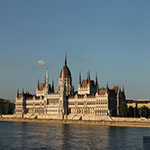
EU Enlargement in the Hungarian Perspective
In the new Hungarian Security Strategy adopted in February 2012, it is clearly stated, that Hungary wants all of its neighboring states to become a full member of the EU as soon as possible (and, with extension, would like to see the Western Balkans states in the EU as well.) From these assumptions, my paper analyzes the Hungarian perspectives, interests and goals in the Enlargement process and shows that Budapest is an important, albeit often neglected motor of the European integration in this regard.
The Future of the European Union Enlargement and Its Challenges
This paper attempts to examine some of the key contemporary challenges confronting the European Union, and to explain how they are challenging for the EU while paying a close attention to the possible solutions to the problems. The aim of this paper is analyzing the following challenges: The first issue is the future shape of enlargement of the EU. The second structural challenge is democratic deficit that has often been described as the distance between the EU institutions and citizens. The third challenge is dealing with sovereign defaults which we can examine the case of Greece and the future of euro. The final challenge is foreign policy dilemma.
The Impact of the European Model in State-Building Promotion: The Western Balkans and the Albanian Case In the EU Integration Process
Abstract: The European Union remains the main actor to step up for significant efforts to achieve a successful democracy building in the Western Balkans. The main aim of this study is to analyze the impact of the EU model and approach to achieve a democratic state-building through promoting political reforms in the Western Balkans. However, the study will analyze the path of the Western Balkan countries on their state-building processes and the EU's impact on the effective implementation of institutional reforms, on political and economic change in the countries of Western Balkans. The paper
Defining the EU Mission in Kosovo
This paper focuses on the dimensions of coherence of EULEX aiming to identify its profile within the ESDP framework, by examining its internal and external coherence. In terms of vertical coherence, the paper will explore the Mission as conceptualized and ‘incepted’ in Brussels, in comparison with its actual deployed form on the ground in Kosovo. In terms of horizontal coherence, the paper engages in a comparative analysis between, the discourse of EULEX and its action, on one hand and deliberating the multiple identities of the Mission, which transcend the traditional security concept, on the other. From the theoretical perspective, the paper brings together theories of security studies to analyze EULEX’s action on the ground and discourse theories used in political science to analyze the text and speech of the Mission.